From Suez to Hormuz: A New Test for the UK-US Alliance and Global Economic Risks
Sunil Karki,
Published 2026 Mar 22 Sunday
KATHMANDU: The Strait of Hormuz, considered the heart of global energy supplies and maritime trade, has become the epicenter of geopolitical tension. This narrow waterway, through which approximately 20 million barrels of crude oil (nearly 20% of global consumption) pass daily, is terrifying the global economy due to increasing security challenges. In this context, before fully joining US-led military initiatives to secure the waterway, nations like the UK are putting forward conditions for a "ceasefire" or a clear diplomatic exit strategy.
From the perspective of a senior energy market analyst and global economist, Britain’s caution is not merely standard diplomacy; it is a blend of the historical lessons from the 1956 'Suez Canal Crisis' and the harsh economic realities dictated today by insurance markets like Lloyd’s of London.
Photo : AI Generate
The Mirror of Suez and the Reality of Hormuz: Comparing Economic Weapons and Risks
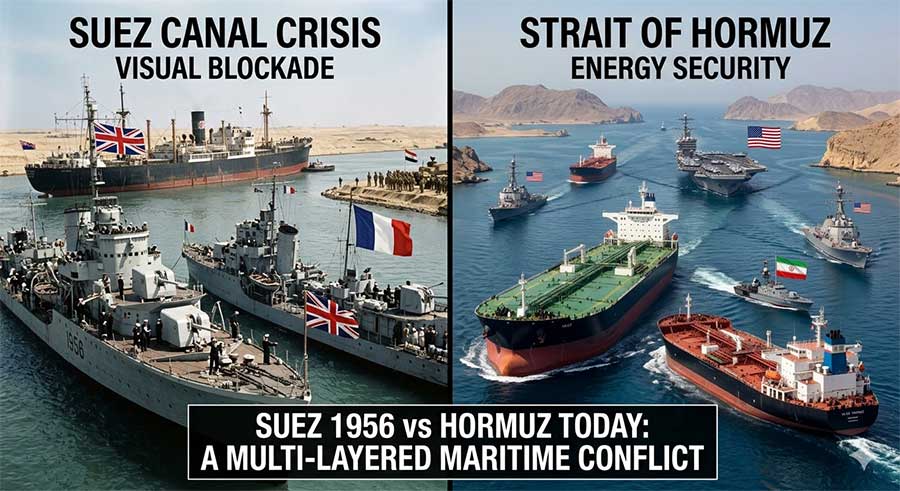
While "economic risk" and "control" are at the core of both the 1956 Suez Crisis and the current Hormuz tensions, their nature is entirely different.
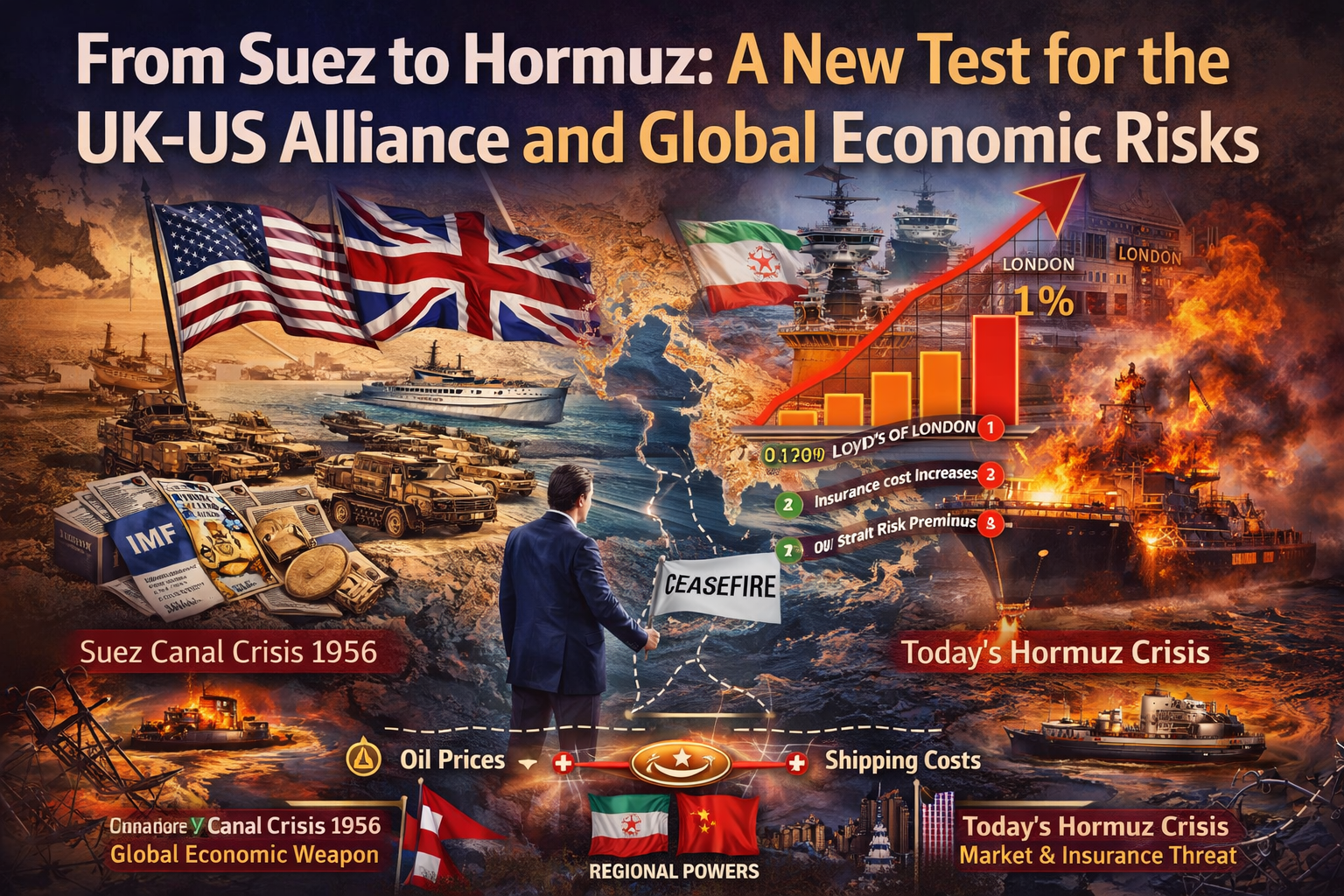
The Economic Weapon of Suez (1956): During the Suez Crisis, the US used a direct "economic weapon" to stop military action by Britain and France against Egypt. The then-US administration threatened to devalue the British pound and block loans from the International Monetary Fund (IMF), forcing Britain into a humiliating withdrawal. At that time, economic pressure was imposed by one state (the US) upon another (the UK).
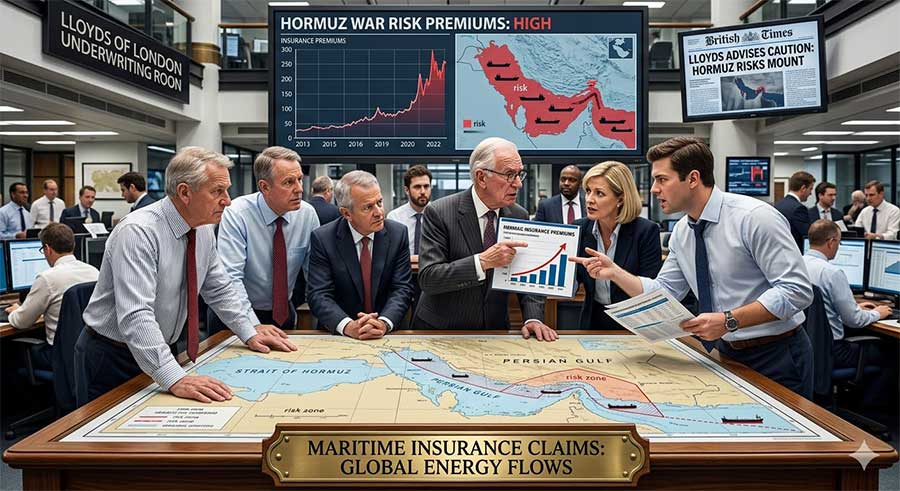
Today’s Economic Risk in Hormuz: Today in Hormuz, the fear is driven by "market forces" and "maritime insurance" rather than state sanctions. Lloyd’s of London, the world's leading maritime insurance market, has declared the Hormuz and Red Sea regions high-risk zones, leading to a massive hike in "War Risk Premiums." When premiums jump from 0.1% of a ship's value to 1% or more, shipping costs skyrocket. Thus, Britain today fears uncontrolled fuel and insurance costs that could devastate its own economy, rather than a direct economic threat from the US.
Photo : AI Generate
The Shift in Power Balance: From Bipolar to Multipolar Complexity
During the Suez Crisis, the world was clearly divided into two poles: the US and the Soviet Union. When Britain acted without US consent, it paid a heavy strategic price and was forced to accept that it was no longer a global superpower.
However, today’s Hormuz crisis is unfolding in a multipolar world. Regional powers like Iran now possess "asymmetric" warfare capabilities. China has emerged as the largest buyer of Middle Eastern oil and a major diplomatic player. In this multipolar reality, Britain knows well that US military action alone can no longer bring stability to the Middle East. Therefore, maintaining a diplomatic balance is a necessity for the UK, rather than risking isolation by provoking regional powers.
British Caution: Pragmatic Reality or Psychological Fear of Suez?
Two primary perspectives dominate Britain's demand for a ceasefire or clear safeguards before diving into America's aggressive strategy in Hormuz:
1. Practical and Risk-Averse Perspective: This view is based entirely on today's economic and political reality. Britain is currently grappling with sluggish growth and high inflation following Brexit and COVID-19. If a war breaks out in Hormuz, pushing oil prices above $150 per barrel and further increasing Lloyd’s insurance premiums, the British economy will almost certainly fall into a recession. Furthermore, domestic politics in the UK is largely against war. Hence, this is not just historical trauma, but a calculated effort to minimize economic damage and maintain political balance.
2. The Psychological and Historical Lesson of Suez: On the other hand, diplomatic analysts believe Britain’s current policy is a subconscious byproduct of the "Suez Syndrome." The biggest lesson Britain learned in 1956 was that the US would not hesitate to economically ruin even its closest allies to protect its own national interests. Consequently, Britain does not want to follow the US now without a clear "exit strategy." This is the result of a fear of getting stuck in an endless US-led conflict and paying the entire economic and geopolitical price alone.
Photo : AI Generate
Multi-Dimensional Impact on Nepal
The geopolitical and economic ripples from the Strait of Hormuz will seriously affect landlocked nations like Nepal, located thousands of miles away:
Fuel Supply: Nepal imports 100% of its refined petroleum products from India. India, in turn, imports a massive portion of its oil (about 50%) from the Middle East via the Strait of Hormuz. Any military disruption in the waterway would break the global supply chain, potentially leading to extreme fuel shortages in Nepal.
Trade Costs: Increases in maritime insurance premiums (including Lloyd’s of London) and cargo ship rentals will make Nepal’s trade with third countries significantly more expensive. As ships take longer routes around Africa or face higher risks, both freight and logistics costs for imports and exports will surge.
Inflation: Nepal's economy is heavily dependent on imports. As soon as international crude oil prices and shipping costs rise due to Hormuz tensions, "cost-push inflation" will begin in Nepal. Expensive fuel leads to higher domestic transport fares, causing the prices of all consumer goods—from food and clothing to construction materials—to skyrocket.
Strategic Dependence: This crisis exposes the fragility of Nepal’s energy security. Being a landlocked nation dependent on fossil fuels makes Nepal a silent victim of global geopolitical shocks. This highlights the urgent need for Nepal to achieve strategic energy independence through the development of hydropower and electric transportation.
Conclusion
The current Hormuz crisis has brought the global economy to a dangerous crossroads. While the Suez Crisis forced Britain to understand the limits of its empire, Hormuz is now forcing even superpowers to bow before the power of global supply chains and the maritime insurance market. Britain's caution reflects both economic reality and historical lessons, serving as a warning to small nations like Nepal to seriously reconsider their energy security policies.